Sunday, October 19, 2014
All the little pieces: Tensor Fascia Latae
All the little pieces: Tensor Fascia Latae: Tensor Fascia Latae The tensor fasciae latae is a muscle with several functions to aid the hip. This muscle, approximately three fingers ...

Tensor Fascia Latae
Tensor Fascia Latae
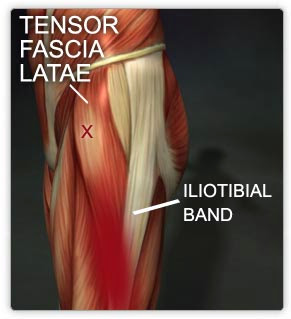
The tensor fasciae latae is a muscle with several functions to aid the hip. This muscle, approximately three fingers wide and located on the lateral side of the hip, is an abductor and internal rotator of the hip, and a hip flexor. As an abductor of the hip the TFL (tensor fascia Latae) aids in drawing a limb away from the body. The TFL works together with two other important muscles of the gluteal, gluteus medius and gluteus minimus. As an internal rotator of the hip, TFL works with a group of muscles that act to stabilize the hip. Gluteus minimus primary function is to stabilize the hip when walking or standing. TFL aids in the equalizing of the gluteus minimus and medius when an individual is standing or walking with the effect on the opposite of side of the TFL.
If the TFL becomes hindered, the rotation of the hip will feel a constraint and an additional burden will be placed on the TFL. Inhibition of the TFL will often radiate pain into the groin area.
Additionally, the hampering of the TFL may in turn cause pain in the psoas, rector femoris, adductors, and Sartorius’s muscles. This small but mighty muscle is important in keeping the hip flexors and gluteal functioning properly.
Another area that may be affected by TFL is the IT band. Strengthening the TFL before rolling out the Illiotibial Band will prove fruitless, unless strengthening the TFL occurs first. Find a physical therapist or a certified personal trainer to help secure the best exercises for strengthening this muscle, which will help decrease discomfort in so many areas of the hips and gluteal.
Some causes of the pain the TFL is sitting, driving, or exercising at a 90 degree angle for long periods of time. Other causes of TFL discomfort are sleeping in the fetal position or sleeping with feet elevated. Runners and walkers often experience pain in the IT band, which in turn radiates pain to the TFL. An individual may be overweight which also can increase the pain in the hip and TFL area.
The body is interconnected. Connecting muscles often refer pain and tenderness, when in fact the muscle that is being affected cannot be determined. Massage therapy can locate the muscle and surrounding muscles that are causing the pain. With proper palpitations and manipulation the client may feel relief within a few weeks if properly treated.
David Kent, L. N. (2012, February). Hip and Thigh Pain: The Tensor Fascia Latae Connection. Retrieved from Massage Today: http://www.massagetoday.com/mpacms/mt/article.php?id=14542
The Often Overlooked Tensor Fascia Latae. (2010). Retrieved from Neurokinetic Therapy: http://neurokinetictherapy.com/the-often-overlooked-tensor-fascia-lata


Wednesday, October 8, 2014
All the little pieces: Help Your Body Help Itself
All the little pieces: Help Your Body Help Itself: Help Your Body Help Itself Lakewood Organic Black Cherry Juice is a product I drink and recommend to individuals with sore muscles. The re...
Help Your Body Help Itself
Help Your Body Help Itself
Lakewood Organic Black Cherry Juice is a product I drink and recommend to individuals with sore muscles. The reason this juice is so good for muscles is all the minerals, anti-oxidants, and vitamin sources contained in one serving (1/2 cup). There is not fat, cholesterol, and only 10 milligrams of sodium per ½ cup serving. Check out the vitamins that this product contains: Vitamin A, Vitamin C, Vitamin E, Vitamin K, Vitamin B2, and Vitamin B4. Additional the nutrients found in Black Cherry Juice are Calcium, iron, niacin, magnesium, phosphorus, and Manganese.
Black Cherry Juice has essential micro-nutrients, vitamins, and minerals to aid in: 1) managing uric acid
2) restores electrolytes
3) helps to maintain healthy blood pressure levels and keep normal
Cholesterol levels
4) improves iron absorption
5) helps with cell growth and aids in digestion
Lakewood Organic Black Cherry Juice can be found at your local Publix store in the healthy juice section. Your muscles will thank you for drinking this healthy drink.


Saturday, September 20, 2014
All the little pieces: Sacroiliac Joint
All the little pieces: Sacroiliac Joint: The Sacroiliac Joint By Karen Benford Smith The sacroiliac joint links the sacrum and pelvis. This joint forms a merging of the three bon...
Sacroiliac Joint
The Sacroiliac Joint
By Karen Benford Smith
The sacroiliac joint links the sacrum and pelvis. This joint forms a merging of the three bones that make up the pelvis: the ileum, ischium, and the pubic bone. The main function of this joint is to provide stability while limiting the amount of motion. Five different ligaments connecting to the SI Joint help aid in stabilizing this join. There are 35 muscles that connect in some fashion to the sacrum which help deliver additional stability to the hip and lower back. Muscular and ligament pain produced in the SI Joint account for 27% of the back pain seen by doctors and emergency room attendants. (Nestor, 2008)
The aging process changes the formation of the SI Joint from smooth and rounded found in youngsters to a more rigid source with more friction and restrictions in older adults.
 From Web Md:
Find the Right Treatment for Your Back Pain
Complementary Back Pain Treatments
There are several other back pain treatments you can try.
• Acupuncture. An expert inserts tiny needles in your skin at specific points to relieve pain. Studies have found that acupuncture can help some people with back pain.
• Electrical stimulation. This involves sending harmless levels of electricity to the nerves in order to ease pain. The most common form of this treatment is called transcutaneous electrical nerve stimulation (TENS.)
• Massage. One study found that massage helped reduce back pain and improve function faster than regular medical care alone. Be sure to tell your massage therapist about your back pain and any injuries.
• Spinal Manipulation. An expert will press against a joint in your spine with hands or a device. The idea is to relieve pressure and realign the joints and muscles. Spinal manipulation is also called chiropractic adjustment. Studies have found the approach can help with back pain.
Tips to Prevent Back Pain
• Seek support from your furniture. Sit in chairs with good back support. Make sure your desk is at a comfortable height.
• Have good posture. Try not to slouch when you're sitting or standing. Keep your shoulders back when sitting at a desk. Don't let your shoulders creep up toward your ears.
• Lift carefully. Don't try to pick up things that are too heavy. When lifting, bend from your knees, not your waist.
• Sleep on your side with your knees bent. It puts less stress on your spine. Try not to sleep on your stomach. If you sleep on your back, put pillows under your lower back and knees.
• Stretch. Before you work out or do anything strenuous, stretch first. It lowers the risk of a strain or sprain.
View Article Source
Reviewed by Laura J. Martin, MD on January 28, 2013
© 2013 WebMD, LLC. All rights reserved.
From Web Md:
Find the Right Treatment for Your Back Pain
Complementary Back Pain Treatments
There are several other back pain treatments you can try.
• Acupuncture. An expert inserts tiny needles in your skin at specific points to relieve pain. Studies have found that acupuncture can help some people with back pain.
• Electrical stimulation. This involves sending harmless levels of electricity to the nerves in order to ease pain. The most common form of this treatment is called transcutaneous electrical nerve stimulation (TENS.)
• Massage. One study found that massage helped reduce back pain and improve function faster than regular medical care alone. Be sure to tell your massage therapist about your back pain and any injuries.
• Spinal Manipulation. An expert will press against a joint in your spine with hands or a device. The idea is to relieve pressure and realign the joints and muscles. Spinal manipulation is also called chiropractic adjustment. Studies have found the approach can help with back pain.
Tips to Prevent Back Pain
• Seek support from your furniture. Sit in chairs with good back support. Make sure your desk is at a comfortable height.
• Have good posture. Try not to slouch when you're sitting or standing. Keep your shoulders back when sitting at a desk. Don't let your shoulders creep up toward your ears.
• Lift carefully. Don't try to pick up things that are too heavy. When lifting, bend from your knees, not your waist.
• Sleep on your side with your knees bent. It puts less stress on your spine. Try not to sleep on your stomach. If you sleep on your back, put pillows under your lower back and knees.
• Stretch. Before you work out or do anything strenuous, stretch first. It lowers the risk of a strain or sprain.
View Article Source
Reviewed by Laura J. Martin, MD on January 28, 2013
© 2013 WebMD, LLC. All rights reserved.
Wednesday, September 17, 2014
Subscribe to:
Posts (Atom)